View Comments

First Impressions – Make them count


As we prep for Day 1 of testing at the NHL Combines, many of the players have already undergone several interviews with prospective teams.  These interviews are opportunities for GMs and Player Directors to get to know the players on a personal level.  Teams have had plenty of opportunities to evaluate a prospects playing ability, yet most have not had a chance to meet with players in a 1-on-1 setting.  Thus, creating a great first impression is paramount and could be a key factor in getting drafted.

The ability to create a good first impression is something that everyone should aspire to do. You want to be yourself, present yourself appropriately, be polite, smile, and be confident.

As many of you will be attending summer college camps, showcases, tournaments, and visiting colleges this summer, it is essential that you carry yourself appropriately. The college hockey coaching world is small and coaches talk to each other about prospects all the time. So its important to work hard, compete, and be on your best behavior at all times – you never know who might be watching. You only have one chance to make a good first impression and whether or not people admit it, they are judging you and forming an opinion of you the moment you first enter their lives.

Share
Read More...
View Comments

Qualities of Top College Hockey Recruits


I recently spoke with several college hockey coaches and asked them a simple question: What 5 qualities do you look for in a prospective recruit? In other words, for a player to stand out in your eyes, what must they be able to demonstrate to you? Here are the top 7 answers:

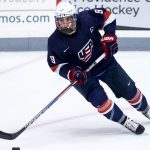
#1: To no surprise, was skating skills. Skating is the foundation of hockey and is the most important skill that must be mastered to become an elite player. When evaluating recruits, college coaches ask themselves: Does the player have an efficient skating stride? Is it smooth and effortless? Can the player accelerate quickly? Do they have good open-ice speed?

#2: Are they a team player? Hockey is a team game and for players to be successful at the college level, they must show a willingness to be a team player. Are they unselfish? Do they know their role? Do they accept criticism? Do they support their teammate on and off the ice?

#3: Do they work hard? Work ethic is an essential component to succeeding at everything in life, so why should hockey be any different. College coaches want players that work hard all the time. When they are evaluating players at showcases, coaches take note which players give 100% every shift and they also note which players give up easily and which players only try when the puck is on their stick. Hard work and a willingness to train (on and off the ice) are a must if you want to play at the college level.

#4:  The player’s personality. Are they passionate about the game? Do they stay positive and upbeat even when losing? How do they react to adversity? Do they take bad penalties? Coaches are trained to pick up on little signs that reveal personality traits and how those traits will affect the way they play the game, the way they would interact with teammates and coaches.

#5: Do they compete hard? During games, does the player give 100% every shift? Are they willing to battle in the corners? Do they battle for position in front of the net? Will they sacrifice their body to block shots? Coaches pay a lot of attention to those players that are willing to do whatever it takes to get their job done. If players shy away from the physical side of the game, the coaches will take note!

#6: Hockey sense: I explored this concept in a blog post last month. But in essence, does the player have the ability to see the ice, to read, react and anticipate. Decision-making is the cornerstone of “hockey sense.” While skills are very important to successful performance, it is the athlete’s conceptual abilities that make the difference.

#7: Academics are important. If a player doesn’t maintain good grades, they might have difficulty in getting into a particular college, but more importantly, bad grades are also tell-tale signs of lack of work ethic, poor time-management skills, etc. If your hockey skills catch a college coach’s eye, then make sure your grades are also good, or they may not take a second look.

College coaches spend all season evaluating players during games and tournaments, and are able to develop a pretty good understanding of what players can play the game (ie. skate well, good skill-set, good hockey sense), but how do they tease out all of the intangibles (willingness to train, team player, personality, competitiveness, etc.)? This is where summer hockey comes in to play. Most college coaches instruct at summer hockey camps, watch players at summer hockey showcases and tournaments, and also evaluate players at the various USA Hockey Select camps.

EXACT Hockey has decided to take this to the next level by initiating a new program for high school-aged players called the National College Development Clinic. This program is designed to bring college coaches and players together for a weekend of intense development, instruction, and learning.  Our college hockey camps will have a maximum 7:1  player-to-coach ratio, providing each player the personalized attention they deserve. This program is one-of-a-kind in that it integrates mental training into on-ice sessions and off-ice sessions. In addition, our pre-camp mental diagnostics provides a unique portrait of who you are and enables you and coaches to learn more about how to improve the psychological game and character development.

By enrolling in one of the National College Development Clinic regional events, you have decided to create an opportunity for yourself, one that will showcase, not only your hockey skills, but also your “intangible skills” – the ones that set you apart from all the other good hockey players, to college coaches from across the country. The personalized instruction and 1-on-1 interaction with college coaches will provide them with a glimpse into your personality, work ethic, competitiveness, willingness to learn, and your passion for the game.

Share
Read More...
View Comments

Olympic Results Take Time – A Recap of Team USA’s Hockey Success


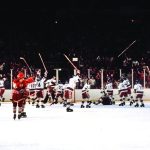
Watching the men’s hockey tournament at the 2010 Olympics has been thrilling. I know it’s easy to say in hindsight that I had a good feeling about that team, but really, I did. I promise.   We are actually pretty fortunate in that we have been able to evaluate many of the players on Team USA at some point or another through our work with NHL teams or with the player directly when his agent or coach purchased our services.   Given our experience working with athletes at this level, we’ve done a lot of research into what it takes to achieve that kind of success. So, watching Team USA play in action was another opportunity to see these gifted players in action.

I think if there is one thing that can be taken away from the success of this team is that it simply wasn’t good luck or good genes. It was hard work by those players for a very long time. Their hard work started well before they were selected last year to be on the team.  I have a few thoughts about this and how it applies to competitive hockey players today.

In EXACT’s work with the National Hockey League player development staff, USA Hockey coaches, or various youth hockey association directors, we hear these two main points about player development all the time:

First, player development and hockey training is a long journey and requires a well-rounded approach to training starting early on. I don’t think many young athletes these days realize that success happens over the period of a decade, not the period of a few days, months, or even a few years. They often look for shortcuts or one simple solution—a magic pill, maybe?—that will make them better without the hard work. But every single one of those athletes on Team USA had a long history of a strong work ethic and well-rounded approach to skill development. They didn’t just start working hard in the last year or two. They didn’t begin preparing for the Olympics only a few weeks in advance. They were working hard back when they were youth hockey players. They were listening to their youth coaches, practicing what they learned, and applying it during games. They were expanding their repertoire of skills, trying new positions, and studying the game as a whole.

In EXACT’s analysis, successful players don’t rely on one magic type of shot, stick handling trick, or mental technique that made them extra tough during the tournament. Instead, it is their well-rounded set of skills honed over the course of development. In fact, at their earliest ages, they often play multiple sports other than hockey which help them refine their motor skills and overall sports skills.

Second, athletes are responsible for their own development. I know I just gave accolades to the youth coaching staff who work with players day-in and day-out on the ice, but at the end of the day, each player’s success is dependent on the player him or herself, not the coach.  The American Development Model’s premise that the athlete is the center of development is spot on.  Remember, Team USA didn’t become successful overnight just because a coach, friend, or cheerleader whispered into their ears, “Be tough! Be confident!”. No, they were ready for Olympic success because of the decade of hard work they had put into their own development before those Olympic games were even set to take place in Vancouver.

The reality for each of these players is that through the course of their development they’ve had numerous different coaches, teammates, and opponents. The athlete himself is the constant during his journey. Why does this matter? When EXACT Sports looks at the characteristics of successful athletes, we see that they generally display a high acceptance of responsibility. This is the ability for a player to accept responsibility for their own actions (or inactions), learn from them, and grow. No one single coach has all the answers for you, nor will he or she be responsible for your failings or mistakes. Your success will ultimately have to come from inside of you and you alone.

Share
Read More...
View Comments

USA Hockey Infuses ADM into Select Player Development Camps


In 2009, EXACT Sports began a relationship with USA Hockey to improve the monitoring and development of its top players attending the Select camps in Rochester, NY. EXACT looks forward to continuing the relationship which includes the behavioral, physical, and skill/technical monitoring of players.

Continuing this summer, EXACT Sports will incorporate its advanced behavioral diagnostic (Competitive Athlete Psychological Inventory), sophisticated mental efficiency tool (Assessment of Mental Performance), physiological development protocol (Physical Evaluation of Performance) and analytical methodology for the National Hockey League’s player evaluation forms (Central Scouting Service) into the camps. These tools align well with USA Hockey’s mission for optimal athlete development, through the American Development Model (ADM). EXACT applauds the youth-focused approach and is proud to be partners of USA Hockey. The ADM’s mantra says it best — I am Potential.

Share
Read More...