
View Comments

Hockey Off-Season Training: Aerobic v. Anaerobic Training


Welcome to Part 2 of our Off-Season Training guide:  Aerobic v. Anaerobic training, which should I focus on?

Your body has different energy systems that work together to fuel your hockey performance. Although hockey is primarily an anaerobic sport, a strong aerobic base allows you to work longer and at a higher intensity by postponing fatigue and allowing a speedy recovery. The aerobic system provides energy for low- and moderate- intensity exercise and helps the body recover from fatigue. For example, a 1-hr bike ride at a comfortable pace is fueled mainly by the aerobic system. Hockey is characterized by repeated bouts of high- intensity action interspersed with periods of moderate activity and rest. The aerobic energy system supplies only a small portion of the energy needed during  moderate activity, but it is critical for efficient recovery between play stoppages and during time on the bench.  Aerobic conditioning can be improved through submaximal continuous exercise and through high- intensity, intermittent exercise. Submaximal continuous exercise at 75-80 % of your maximum heart rate for 30 to 60 minutes will improve your heart’s ability to deliver oxygen to the muscles for energy and will allow the body to recover more quickly from intense efforts. Intermittent aerobic condioning, using a series of 2-3 minutes if higher intensity exercise interspersed with 2 to 3 minutes of rest builds up the aerobic supply system and increases the muscles ability to extract oxygen from the blood.

There are two different types of programs to build aerobic fitness:

  1. Continuous, moderate intensity, long duration programs
  2. Intervals of high intensity work followed by easy recovery intervals of 1,2, or 3 minutes grouped into various packages of time

For interval programs, the training load can be increased in a number of ways:

  • Increasing the duration of work intervals from 1 to 2 to 3 minutes
  • Increasing the intensity of each work interval
  • Decreasing the time of the recovery interval
  • Increasing the intensity of the work interval
  • Increasing the number of work/recovery intervals

On the other side of things, the anaerobic systems produce energy very quickly to meet the demands of intense action, such as the slap-shot, sprinting on a breakaway, or stops-and- starts while penalty killing. These systems utilize the ATP-PC (phoshagen) system and the glycolytic system for energy. In hockey, although the game itself lasts for about an hour, the players are usually only on the ice for high- intensity shifts of approximately 30 to 45 seconds (ideally). Most teams have 3 to 4 lines, allowing for a 1:2 or 1:3 work-to-rest ratio. However, depending on the situation (e.g., penalty killing, power plays or missing player), key players often work within a 1:2 or 1:1 work-to-rest ratio. Due to the nature of hockey, it is important to train anaerobically.

The ATP-PC system provides immediate energy, in the form of ATP, for short-term, high- intensity activities for up to 10 seconds. The glycolytic system provides energy for longer high- intensity activities ranging from 10 seconds to 2 minutes. This level of training corresponds directly to the physiological requirements of the game. To develop anaerobic energy systems, we will utilize sprint interval training. These involve full-out, high- intensity, high-speed intervals followed by rest or active recovery. We will use sprints ranging from less than 10 seconds to around 30 seconds, with a 1:2 or 1:3 work-to-rest ratio. [For example, a 1:2 work-to-rest ration involves sprinting all-out for 30 seconds, active recovery for 1 minute, then sprinting full out again.] Towards the end of the training program, you should make an attempt to progress to 1:1 work-to-rest ratios, especially if you are a defenseman or part of the special team units.

Share
Read More...
View Comments

Hockey Off-Season Training: Using your time wisely


To understand hockey strength and conditioning you have to be aware of the unique demands placed on an ice hockey player. In order to be successful in hockey, besides having exceptional skills, players should participate in a program that will enhance their strength, power, speed and agility. Ice hockey has a number of unique features. During the game, players must accelerate and decelerate rapidly in shifts that last 30-45 seconds on average. The game is played in shifts and the player rests sitting down. In addition, hockey players must endure extremely high force collisions due to the high speeds attained in skating.

Although many so-called authorities will tell you the energy supply for hockey may be primarily aerobic, the trained observer may draw a different conclusion. Forwards generally play in a rest-to-work ratio in the area of 3:1, while defensemen use a rest-to-work ration of 2:1. Most sports can be classified somewhere between low intensity and high intensity activity. Low intensity activities can continue for long periods of time. However, high intensity activities can proceed only in short spurts interspersed with regular rest intervals to facilitate recovery. Using these definitions, hockey places towards the high intensity end of the scale.

The off-season strength program should focus on preparing both the muscular system and the neuromuscular system. Exercise selection should include explosive weightlifting movements, multi-joint lower body exercises, upper body pulling and pressing movements, and a full range of trunk movements.

The off-season conditioning program should focus on speed development and interval training. We tell our athletes: “train slow, get slow.” Conditioning, speed development, and strength training should be specific to the sport of ice hockey. Speed training on land, using similar intervals to the game, but some conventional aerobic training should also be done.

There are two phases to building fitness for hockey:

  1. Improving general fitness or getting “into shape”
  2. Hockey-specific conditioning

Getting in shape means improving aerobic power, flexibility, strength and diet while decreasing body fat and increasing muscle mass. The second phase requires conditioning specifically for the demands faced on the ice. Exercises and drills are selected and completed with specific exercise prescriptions so that your physical and physiological development best suits the game of ice hockey. We are going to work on developing a good base of strength and conditioning before moving onto the development of sport-specific attributes.

Over the next couple of weeks, I will continue to add blog posts expanding on the principles of designing an effective summer training program, the benefits of attending specialty hockey clinics and hockey camps, and the things you need to do to become a college hockey player.

Share
Read More...
View Comments

Art of Puck Possession


In hockey, the team that demonstrates the greatest control and movement of the puck, typically is the most successful. This facet of the game is termed puck possession and can be defined as having control of the puck for as long as possible. With this in mind, the only time that would be acceptable to lose control of the puck, would be after a scoring chance. As a player and a fan, I know the difficulty in maintaining puck possession even for brief periods of time, let alone an entire shift. Yet, as a coach, I understand the need to teach, preach and support this aspect of the game.

How do you teach young players not to get rid of the puck needlessly?
How do you teach players to always pass to an open teammate?
How do you teach a player to get open?

If a coach can find a way to teach these facets of the game effectively, then he will be able to develop hockey players with an ability to take their game to the next level (AAA hockey, junior hockey, college hockey, and beyond). In order to begin implementing practice plans that address puck possession skills, we need to develop an understanding of three key concepts (regroup, support and flow). You cannot master a regroup system without a solid understanding of support and flow, as such, these three concepts must be taught with an integrated approach.

Regroup:

Regrouping is simply being able to maintain puck control when forward progression of the puck is impeded or transition from defense to offence when recovering the puck from a turnover. For example, as a puck carrier, your goal is to get the puck into the offensive zone and create a scoring opportunity. However, if forward progression is impossible because of tight coverage, the puck carrier must adapt. Rather than dump the puck or force a pass and risk creating a turnover, the puck carrier should look to pass the puck sideways, and if that option isn’t available, should turn around and pass the puck backward in order to maintain possession of the puck.

A very effective use of this tactic is when you get trapped along the boards in the neutral zone. Rather than shoot the puck up the boards, the puck carrier should execute a sharp turn, and pass to the defenseman. The defenseman should then look to pass the puck to his partner (using the ice) to create a quick up opportunity and gain the zone on the other side. This regroup, when executed properly, will allow a team to gain the offensive zone quickly and create a scoring chance. By demonstrating patience with the puck in the neutral zone (ie. moving the puck from side to side or by moving it  backwards), you give your teammates the opportunity to generate speed through the neutral zone and allow them to create opportunities against a defense that may get caught standing still. Two simple rules that players should try to follow:

1. As a defenseman, you should always look to use your partner as a regrouping option. Do not haphazardly dump the puck up the boards or make a difficult cross-ice pass to a forward.

2. As a forward, whenever you find yourself with the puck on your stick facing one of your defensemen, give them the puck and look to regroup.

The ability to regroup on a turnover in the neutral zone should be a part of any successful team’s game plan.

Support:

For the regroup rule to be successful, the puckcarrier must be supported on all sides (ie. front, back, left and right) at all times. This rule has the support players (non-carriers) making themselves available as valid passing options both in front and back of the puck carrier. This means that the support player should be open and reasonably close to the puck carrier.

Puck support can then be defined as a team’s ability to maintain puck control while moving the puck into a scoring opportunity. Efficient puck support requires both a team and individual mentality. From a team perspective, it requires a collective effort to move the puck into the offensive zone and create a scoring opportunity. But, as an individual, it requires each support player to provide options to the puck carrier. To become an effective support player, you must learn to anticipate the puck carrier’s intentions, read the defensive pressure, and adjust your positioning with respect to that of the puck carrier. The ability to read and react by anticipating quickly and making adjustments is of paramount importance because it requires a unified effort (ie. movement of all players) to generate a great scoring chance.

An effective support player needs to be proficient at two key tasks: the ability to get open for a pass and the ability to create space for the puck carrier. When a teammate has the puck, there should be two support players (typically one defenseman and one forward) looking to get open for a pass. Support players need to read, not only, the movement of the puck carrier, but also the movement of the defenders and the open playing surface available and then, make the necessary adjustments to maneuver into an open position and create options for the puck carrier (ie. triangulate the attack).

As an example, when in tight quarters, a give-and-go play works well, providing the puck carrier an opportunity to quickly get past a defender. A second tactic learned from the Europeans is cycling and it is another great method of puck support that enables a team to maintain control of the puck in the offensive end.

The second method for players to support the puck carrier is to create space so that the puck carrier has room to skate with the puck. This method involves the support players spreading out and away from the puckcarrier, creating time and space for that player. By providing the puck carrier with various levels of support (passing, skating, shooting) players can individually contribute for a successful team effort.

Flow:

The final concept that we will explore is flow. Flow can be defined as the movement of players in the process of interacting and reacting to the movement of the puck. The speed in which a team reacts to the movement of the puck defensively (defensive flow) will determine what options are available upon receiving the puck (offensive flow). The way in which a team reacts or responds to defensive flow and pressure will determine how successful their regroup and tranisition game is. Ideally a team would like to hit the blue line with speed and enter the zone with puck possession and an opportunity to create an offensive attack. For this to happen, the offensive team must be able to move the puck away from pressure. Each player, must also keep manuever into passing lanes to provide the puck carrier with multiple options when it comes to moving the puck. This can be accomplished through quick puck movement, close and quick support, and by all four support players becoming passing options. The ability of a team to create space and options to the weak side (ie. away from the defensive flow) will correlate to a team’s success in its transition game.

For teams to be successful in incorporating the above concepts (regroup, support and flow) into their games, the players must develop the proper skills set and the coaches must implement appropriate practice plans. Stay tuned for the next two blog posts outlining 1) what you can do as a player to improve your puck possession ability and 2) what you can do as a coach to improve your team’s ability to maintain puck possession. These concepts can be taught and reinforced during summer hockey camps, specialty hockey clinics and private training.

Share
Read More...
View Comments

7 Habits of Highly Effective Hockey Coaches


(The Role of the Coach in Player Development: Part 2 of a series of discussions on factors influencing player development)

Coaches also have the ability to significantly impact the development of their players in their chosen sport(s). As with parents, the role of the coach should be one of support and encouragement with the goal of creating a progressive (and enjoyable) learning environment that fosters continued growth and helps their athletes become better hockey players.

7 Habits of Highly Effective Hockey Coaches:

1. Be respectful: As a coach, you should lead by example. Respect your players, parents, other teams (coaches and players), officials, and most importantly, respect the game.  The coach must treat everyone with respect – and they will respect him in return. The game is much bigger than you, and its your honesty and integrity that will get you much farther in life than sacrificing them in order to win games.

2. Be fair and compassionate: Remember that the game is about the players, not about you. As a coach, it is your duty to coach every player on team, not just the better players.  Follow this simple rule and your players (and subsequently your team) will benefit greater in the long run.  Every player on the team is important to success of the team and they will contribute at some point, if given the opportunity.  Similarly, rules are rules and they should apply to everyone on the team.

3. Be patient and encouraging:  Effective coaches learn to continually project a positive and upbeat attitude. If not, your players will eventually catch on and begin to losing their joy for the game. Part of becoming patient involves your ability to show tolerance, understanding, perseverance and consistence. Good coaches truly care for their players and enjoy seeing their progress.

4. Be a student of the game: As a coach, you are an educator. To become an effective educator, you should be passionate about the game and strive to immerse yourself in the game. Coaches should be willing to learn, to experiment and to make mistakes (and learn from them). Every time you step on the ice, you should be willing and able to learn something new from your players.

5. Be flexible: Great coaches demonstrate flexibility and an openness to change. Flexibility can be regarded as the ability to remain strong in your convictions while yielding to some lesser issues or points.

6. Be a positive role model: Coaches should model the behavior they expect out of their athletes — “walk your talk”. Show your players how to be humble, respectful, honest, secure, passionate and confident.  You will be surprised at how well they will develop, not only as players, but as people if you create the appropriate environment for them to learn in.

7. Be a good communicator: In order to impart your knowledge and love for the game, you must be able to communicate effectively with your team. For this to happen, you need to understand that not all players will respond to criticism and praise in the same way, nor do all players learn in the same way. The development of an effective communication strategy begins with getting to know your players, understanding how each player learns, and then adapting your style/method of delivery to suit each player’s individual needs.

When you agree to become a hockey coach, you accept a responsibility to be true to the game and be true to the players you coach. It is your duty to create an environment that pushes every one of your players to strive to become the best that they can be.  Think back to your childhood and remember all of the coaches and teachers who had, both positive and negative, influences on your growth and development (as a hockey player and as an individual), and utilize those experiences to help you become a better person, a better educator and a better coach.

Stay tuned for the next post looking at the Players Role in His/Her Own Development.

Share
Read More...
View Comments

7 Habits of Highly Effective Hockey Parents
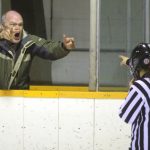

(The Role of the Parent in Player Development: Part 1 of a series of discussions on factors influencing player development)

Parents have the ability to significantly affect the development of their child in their chosen sport(s). This influence can have positive and/or negative effects on their development as a player. The role of the parent should be one of support and encouragement with the goal of creating an enjoyable environment that fosters continued progress and helps your the child become the type of player they want to be (not the one you want them to be).

7 Habits of Highly Effective Hockey Parents:

1. Be patient and encouraging: Parents must find a balance between constructive criticism and support, so find a way to be critical at the right times and supportive when needed. And the right times are not from the stands, in the lobby or on the car ride home. Remember, you are in the stands as a spectator, so allow your child to play the game. Yelling at them from the stands, to do this or that, can be a major distraction. As a parent, strive to focus on their efforts and performance, not on their mistakes and whether the team won or lost.

2. Let the coaches coach: The coach is the leader and has the responsibility of making decisions that are in the best interest of the team. Although you may not agree with a decision, you have to understand and respect their role as the coach, and support their actions. It is the coaches job to guide the team and any advice that you give you child on how to play may end up confusing them and undermining the efforts of the coach. If you have particular concerns about your child’s development, then bring them to the coach’s attention at the appropriate times (a simple email or phone call will suffice).

3. Teach them the importance of discipline and respect: As a parent, you have a responsibility to help them understand the value of being respectful towards their coaches, peers, opponents and officials. Stress the importance of hard work, commitment to the team, and following team rules. These are valuable life-lessons that you can help instill in your child. As a parent, it is your job to encourage your child to work hard, be a good teammate and understand that there is a commitment involved in being a part of a team.

4. Help them eat properly and get enough rest/sleep: As a parent, you can exert some control over their nutrition, hydration, rest and recovery. The ADM, rolled out by USA Hockey, addresses the concept of sustenance and its role in the long-term development of an athlete (LTAD). When the body performs any type of physical activity, it must be replenished with a broad range of components (carbohydrates, minerals, vitamins, water, etc). Sustenance includes, not only, nutrition, but hydration, rest, sleep and regeneration. Proper sustenance is essential for optimizing training, development and growth.

5. Practice makes perfect: Encourage your child to practice their skills at home (puckhandling and shooting) to help develop the confidence needed to be successful at practice and during games.  The ADM also stresses the importance of the 10-year — 10,000 hours rule to achieve proficiency in a given skill. Simply putting in the time and effort at practices and games does not provide the necessary repetitions to become an elite level athlete. Players must be encouraged to put in extra effort “away from the rink”.

6. Become a student of the game: Players should be encourage to become students of the game and should be provided avenues to help grow their knowledge of the sport. These avenues should include taking them to see live games (NHL, AHL, or JR hockey), watching hockey on TV, and participating in specialty camps, clinics, and other training sessions. By becoming students of the game, they will be provided with the tools needed to grow their “hockey sense”, learn new techniques, and increase their overall enjoyment of the game.

7. Program Choice: Help your child select the right program (club, team, college) and training options (private lessons, camps, clinics) to meet their development needs. These decisions are not easy and as a parent, you need to find a balance among cost, location, coaching staff, and scheduling needs, etc.

Overall, parents should remember that their role is to assist their child on achieving his or her full potential. Be supportive, be encouraging, and help take pressure off of your child, not add more pressure. Let them enjoy the game and watch them develop into great hockey players.

Stay tuned for next weeks post looking at the Coaches Role in Player Development.

Share
Read More...