Decision Processing
“A good hockey player plays where the puck is; a great hockey player plays where the puck is going to be.”
–Wayne Gretzky, Hockey Legend
How far is it to the first down marker? Do you have to consciously look for it when you run your route? How do you line up a one-timer? How do you know how far you have to throw to hit your cutoff man? Do you know where your teammates are at all times? Chances are you’ve never put too much thought into questions like these. The answers are probably something like you “just know”. But what if you had to explain it in words? Could you? You are able to execute sports actions because you have spatial abilities.
The Components of Spatial Ability
The ability to...
... judge the relations of objects in space
... have a whole view of the field
... mentally visualize many routes, plays, positions
...mentally turn objects over or around and imagine how they look
...depth perception
...ability to locate something by its sound source
Know Yourself?
Do you have an awareness of your “center”? Can you feel how your hips move in relation to your feet or shoulders? Having this skill can dramatically help you improve any mechanical flaws or bad habits you may have acquired. It gives you the ability to sense that something is “off,” and if you’re good enough at it, you can quickly identify the problem and take the appropriate corrective action.
Something to Think About
When Olympic beach volleyball gold medalist Misty May-Treanor goes in for a kill, she uses her spatial abilities to time her jump just right. Think about the last game you played. Write down how you used the five components of spatial ability to help your performance.
- Judge relations of objects in space
- Judge shapes and sizes
- Mentally manipulate objects
- Visualize the effects of putting objects together
- Mentally turn objects over or around
Do you have an awareness of your “center”? Can you feel how your hips move in relation to your feet or shoulders? Having this skill can dramatically help you improve any mechanical flaws or bad habits you may have acquired. It gives you the ability to sense that something is “off,” and if you’re good enough at it, you can quickly identify the problem and take the appropriate corrective action.
Decision Speed
You make decisions everyday—such as what to have for dinner—but decisions in sports are much more difficult and require practice. It is common to hear about athletes who can’t think quick enough or “keep up with the game.” Those are the athletes who, while they may be gifted with great skills, simply lack the ability to keep up with opponents. In sports, you don’t have the luxury of being a slow thinker. Everything happens so fast – sometimes in just hundredths of a second – and you must be able to react quickly and make the decision that is the right one. The importance of decision making cannot be overstated.
How Important is Decision Speed?
Here are just a few examples where quick decision-making is crucial in sports.
THE BOTTOM LINE
You can become so efficient at making decisions that it becomes like your instincts are taking over. You are no longer thinking in the sense that we know it; you are reacting.
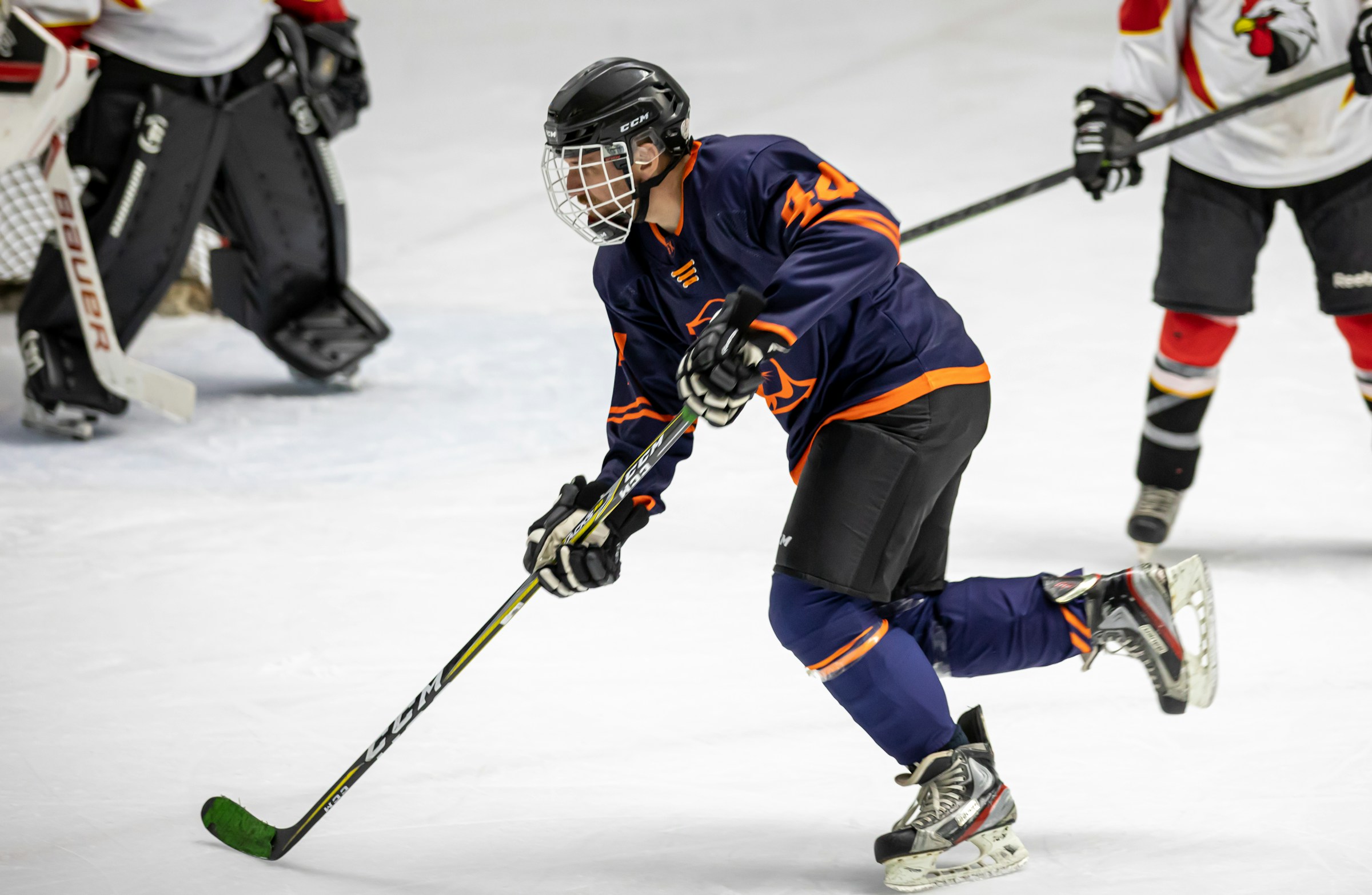
In every sport, games are won and lost by the decisions that athletes and their coaches make. Which pitch to throw, which play to run, who to pass it to – these are decisions that influence the result of a game. Making your decisions harder is that most of the time there is not just one correct response for each specific play. You have to know all of your options and then pick the best one. While it is useful to practice what should happen, sports are too unpredictable. This means you must be comfortable with making decisions “on the fly.” Each sport has its own set of stimuli to react to, but there are also many similarities. For example, expert decision makers in any sport have a specific way of thinking about the action on the field. Expert baseball batters will focus primarily on the area of the pitcher’s release point. This helps them predict the location of the pitch, and therefore, speeds up their reaction time. Less experienced hitters, on the other hand, focus their attention between the pitcher’s head and the release point. And expert hockey goaltenders will focus on the opponent’s stick to determine the location of the upcoming shot. Novice goalies tend to watch the puck. These focal points that help hitters and goalies react more quickly are called anticipatory cues.
What Makes You Aware?
As they say, the “eyes” have it. Some experts have estimated that as high as 80% of all information we perceive is derived from visual feedback, which is closely tied to spatial awareness. Our auditory skills also help our awareness. Something as simple as hearing your feet hit the pavement as you run can be a great form of feedback. Finally, there is tactile awareness – the sense of feel and touch.
Ever have to throw a wet ball before? How does that change your mechanics?
Think Less. React More.
This should be the goal of every athlete. Let’s say you find yourself in the middle of a 3-on-2 fast break. How will you decide who to pass it to? When will you decide? A split second is sometimes all the difference between a flawless fast break that ends in a layup or one that results in a turnover. It is important that you learn to react quickly and correctly when you have to make a sudden decision. Indecisiveness, after all, leads to hesitation, and hesitation leads to getting beat. If you can take everything you’ve learned about how to react from practice, watching film, and previous game play and hone those skills so that they come naturally, you can truly excel. One of the secrets of great athletes is that they have the ability to think less about what they are doing on the field, so as a result, they can focus on dominating the game. Great soccer players can locate the ball and process whether to run, shoot, pass, or dribble all at the same time. A great defensive back makes an interception because he reads the quarterback’s eyes and the receiver’s motions and reacts quickly to the thrown ball. The key is to anticipate, react quickly and explosively, but always in a state of control.
Indecisiveness leads to hesitation;
hesitation leads to getting beat.

EXACT Sports Plan for Success
Think about some short and long term goals when it comes to your spatial abilities and decision speed, and then complete the following sentences.
THE REAL WORLD
Studies have suggested a link between a well-developed sense of spatial awareness and artistic creativity, success in math, science and analytical skills that are used in most problem solving tasks. It can also be important in the development of abstract thought. The ability to organize and classify abstract mental concepts is related to the ability to organize and classify objects in space. Visual thinkers tend to use their visual imagination to organize abstract thought.
Fast and Furious.
So we’ve determined that in order to make good decisions you need to rely on your spatial abilities and that you have to make decisions fast, but is there such a thing as too fast? The short answer is, well, maybe. There is something called the speed-error tradeoff function, which says the quicker you do something, the less accurate you will be. The secret is to find a level of speed at which you can play without sacrificing your performance. Try to get as fast as you can with your decision making until you notice a slip up and you start making mistakes. That’s a good indicator that you need to slow it down and concentrate just a bit longer. Remember, the goal is to maximize speed while maintaining accuracy.For example, the goal of a baseball catcher on a steal attempt by a runner is to get the ball to second base in two seconds flat. If he rushes his throw, however, he will compromise his footwork or throwing mechanics. This can result in a throw that tails or bounces, and more than likely, a stolen base.
Something to Think About
Throwing mechanics are just one example of how slowing things down can help you improve. Write down three
specific aspects of your sport you can slow down that might improve your game.
IN ACTION
During Super Bowl XLIII, Santonio Holmes of the Pittsburgh Steelers demonstrated excellent field awareness with his amazing catch with 36 seconds left to help secure a Steelers’ victory. Holmes had to jump to make the catch in the back corner of the end zone, but still had the spatial awareness to get both feet down before falling out of bounds.
The
Tools to
Improve
Proven methods to improve your spatial abilities & decision speed. Trust us. They work.
Not Just for Clowns Anymore.
Objective: Learn to juggle. This one comes from the circus but it’s not just for clowns! Juggling is one of the best exercises you can do for vision as it works hand-eye coordination, depth perception and peripheral vision. Also helps: Concentration & Focus
Splash Landing.
Objective: Improve your timing. This is a great summertime game for those of you who have access to a swimming pool. Have one person stand at the far end of the pool with a tennis ball in hand, while you stand outside the pool near its edge on the other end. The person with the ball then lobs it in your direction. Your job is to judge the speed and location of the ball and time your jump so that you catch the ball right before you splash into the water. Every time there’s a connection, the thrower and catcher each get a point. Also helps: Concentration & Focus
Video Games.
Objective: Improve your awareness and anticipation. Many studies have shown that playing video games such as Tetris can help spatial abilities. Modern day games include first-person games such as Halo. Just don’t play so much that you get a blister! Also helps: Concentration & Focus & Mental Stamina
BY THE WAY...
Males naturally tend to be better at spatial abilities than females, but studies show that through training, females can become just as strong in their spatial abilities as their male counterparts.
Dodgeball.
Objective: Peg or Be Pegged. The ultimate test of your spatial ability – Where are the other players? Where are the balls? Where do you aim your throws? Which way do you move to avoid a throw? Should you try to catch a throw? These are not easy tasks, especially when you have to do them all at once. The best place for this – a racquetball court. There is nowhere to hide! Also helps: Concentration & Focus & Competitiveness
Processing Power.
Objective: Exercise Your Brain with Numbers. 1. By yourself or with friends hang out by the side of the road (don’t do this while driving!) and see who can add up the numbers faster on passing license plates. If this is too easy add the numbers and multiply by 3, 12, and 12. 2. When you have idle time, start with the number 200 and see how long it takes you to get to 0 by subtracting “7” (e.g., 200 – 7 = 193, 193 – 7 = 186...). Chart your mental efficiency over time and change the numbers. Can you get it under 20 seconds? 3. Pretend you are in the middle of a tight game. Drill in your mind all of the possible things that could happen that you need to react to. Can you do 15 in less than 5 seconds? 3 seconds? Prepare the same way during the actual game!
Target Practice.
Objective: Hit a Moving Target. Wouldn’t it be nice if every time you threw a ball or made a pass, your intended target was standing perfectly still with nothing in the way? Well unfortunately, the truth is that when you make that pass, your target will probably be moving. There is a good chance that you will be moving as well. Practice making passes to moving targets that are moving horizontally, vertically or diagonally. Start with you standing still, then once you’ve got that down, start moving around yourself and test your accuracy. The goal here is to hit your target in stride. Also helps: Concentration & Focus & Decision Speed
Little by Little.
Objective: Get comfortable. When warming up, start with short distances and increase as you go on. For example, if you’re a basketball player, don’t start chucking threes the minute you get on the court. Make a lay-up. Move back two feet. Make that shot. Move back. Make that one. You get the idea. This can apply for any sport. The point is to give your brain a quick reminder about how to judge things spatially and how your body should respond.
Monkey in the Middle.
Objective: Throw Around a Defender. This classic game with a defender trying to intercept a pass is a great way to improve your spatial ability. The object of the game is to pass the ball safely from one person to another without the “monkey” (a third player) getting their hands on the ball. If you have possession of the ball, work on gauging at what arc and with how much velocity you have to throw it at to avoid the monkey. If you happen to be the monkey, try to time the throws just right so you can intercept the ball, then, celebrate by beating your chest gorilla-style. Also helps: Mental Stamina & Achievement Motivation
Look Around.
Objective: Notice your surroundings. Before you play a game, try to get a feel for what elements may force you to change your approach. Is the wind blowing? Is the grass longer? Is the court slippery? In pre-game warm-ups, adjust as needed to account for these conditions.
Watch the Pros.
Objective: Learn proper spacing. When you go to a ballgame, it’s pretty easy to get caught up in the excitement of the game, let alone all the other distractions in the crowd. (Who wouldn’t want a t-shirt shot out of a cannon?) But next time you go to a sporting event, take a few minutes to watch the players and how they move around the court or field. Notice how they move in relation to the ball or puck. Look at what routes they take to meet the ball, or how they position themselves defensively. Find elements that you can incorporate into your game. Also, remember that professional athletes are not perfect. See if you can pick up on spacing mistakes like illegal defense in basketball or a blown coverage in football.
Something to Think About
They call it “home field advantage” for a reason. Write down some unique characteristics of your home field that may affect the opposing team.
Anticipate.
Objective: Try to pick up on cues. Anticipation plays a big role in success as an athlete. In tennis, for example, the speed of a serve can reach 120- mph, so it is important for the opposing player to use whatever anticipatory cues that he can find to make the service return a little more manageable. Try to pick up on cues such as movement of your opponent’s feet, trunk, and shoulders before the serve, as well as racquet displacement and any unique mannerisms he may have. Doing this can help you anticipate the actions of your opponent, and therefore, aid in determining the direction, spin, and velocity of the serve. Also helps: Focus & Concentration
We’re Talking About Practice?!
Objective: Improve your skills when the results don’t matter. The best way to improve decision making is simply to practice. Put yourself in the scenarios that you need to work on, and repeat as often as necessary until you can make the right decisions without thinking. Let the thinking gradually become instinct. Remember to use anticipatory cues, which not only direct your attention to the appropriate places, but also help you predict your opponent’s intentions. Also helps: Focus & Concentration, Mental Stamina & Training Attitude
Drop the Stick, Not the Gloves.
Objective: Speed up your reaction. Here is a fun game to help gauge your reaction time as well as a good way to try to improve it. You will need a partner and a yard stick for this exercise. Have your partner put her arm on the table so that her wrist can extend over the side. Hold the yard stick vertically in the air between your partner's thumb and index finger. Do not let it touch her hand! Pay attention to the position of the yard stick below your partner’s thumb and index finger. Without warning, drop the stick. The idea is for your partner to catch the stick as quickly as possible. Record the distance the yard stick fell. Do this a few times, and then switch places. To make it extra challenging, sing or hum your favorite song while trying to catch the stick Also helps: Focus & Concentration & Competiveness
If...Then.
Objective: Drill yourself with questions. Quiz yourself with “if-then” questions. For example, if you’re a baseball or softball player, you can ask, “If there are runners on 1st and 3rd and one out, then where do I throw the ball if it’s hit to me?” This exercise can be used during games as well. Most good fielders will tell you that they run through all the scenarios in their head before the next pitch is thrown. Also helps: Focus & Concentration
Block It Out If It Doesn’t Count.
Objective: Learn to ignore distractions through selective attention. We make decisions based on the information we have around us. In sports, this can be both a blessing and a curse. We want as much information as possible to make our decisions more accurate, but we have to be careful to focus on only the information we need to make the decision, while blocking out irrelevant stimuli. If you focus on everything at once, you’re bound to suffer from something called cognitive overload – when the information available overwhelms your mind’s capacity to handle a decision making opportunity. Selective attention – focusing only on a few items – will help you with this. Also helps: Focus & Concentration.
Become a Jedi.
Objective: Practice with your mind. Mental practice, or the rehearsal of a physical activity in your mind, is another powerful technique used to improve decision speed. Mental practice is an effective activity because it can directly influence our memory system, therefore, making our response selection process more efficient. We can use it to try to learn a new skill, review a skill before we perform it, or develop game strategies. This does not mean, however, that you can rely solely on mental practice. In fact, compared head-to-head with actual physical practice, mental practice is not as effective. When you use physical and mental practice together, though, you will see better results than if you just use one or the other on their own. Initially, you will want to partake in physical practice before you tackle the mental component. This is because physical practice increases the vividness, controllability, and accuracy of the mental representation of the task. Therefore, the mental practice will be more effective. Also helps: Focus & Concentration & Mental Stamina
Evaluate.
Objective: Learn from your mistakes. You will mess up. That is something we can pretty much guarantee. So when you do, but sure to take a moment – perhaps on your way home from the game – to replay the decision in your head and think about what you could have done differently. That way, the next time you’re faced with the same choice, you will be prepared. Also helps: Goal-Setting & Competitiveness
FINAL THOUGHTS.
Your abilities to sense how your body moves and know where you are on the field or court are skills that often go unnoticed. But when you think about it, so much of your athletic success relies on this. Timing, accuracy and decision speed are just the tip of the iceberg when it comes to skills directly affected by your spatial abilities.