View Comments

The 10 Most Interesting Rituals in Sports


Jason Terry

Image via Wikipedia

What an athlete does before the game can ultimately determine the outcome of it.  Most athletes follow some sort of pre-game routine, whether it is eating a full protein-filled meal the night before the game or getting in a good workout before beginning play.  But some athletes really take it to the next level.  Some have superstitions so strong that they believe failing to follow a precise routine will actually throw off their performance.  There are some pretty wild and entertaining pre-game rituals and superstitions out there, and in this article you’ll learn about the10 most interesting of them all.

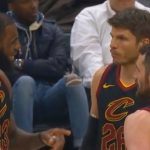
2009 NBA Sixth Man of the Year award winner and now NBA Champion Jason Terry of the Dallas Mavericks always wears his upcoming opponent’s team shorts to bed every night before the game.  If he plays the Clippers tomorrow night, you can bet he’ll be hitting the hay in Clipper red and white.  Maybe this is why Terry finally won a ring this year…or was it the tattoo?

Brian Urlacher, the seven time pro-bowl middle linebacker for the Chicago Bears has a unique routine of his own.  He simply eats two cookies before every game, no more no less.  And they have to be Girl Scout cookies.  Pretty interesting, you’d think he’d have a little more flab on that rock-hard frame.

Two-time National Hockey League Most Valuable Player Alexander Ovechkin has one of the strangest routines of them all.  It may not exactly be politically correct to discuss this one, but I just can’t leave it out.  Ovechkin has publicly stated that before and after every game, he likes to have sex.  Yeah, I said it.

English Premier League soccer player John Terry of Chelsea has a couple superstitions that are definitely unique.  According to his teammate Frank Lampard, Terry has to urinate in the furthest right hand side urinal before every game.  He also sits in the same seat on the team bus, listens to the same music, and parks his car in the same spot in the team parking lot every time.  He hasn’t come out and given a reason for this madness, but we’ll just pretend like there is a good one.

Former Red Sox, Yankee and Devil Rays player Wade Boggs had a routine that seems pretty unimaginable.  Before each and every game throughout his entire career, he would eat chicken.  At 2,440 total games played, that’s a lot of chicken!  No wonder his teammates always called him the “chicken man.”  How the heck can someone eat that much chicken and not get sick of it?

I couldn’t not include a little bit about the greatest NBA player ever.  Yeah, that’s Michael Jordan in case you were wondering.  MJ had a ritual of wearing his alma mater’s team shorts during every game.  He attended the University of North Carolina, so every game, underneath his Chicago Bulls shorts he had on Tar Heel shorts.  To do this he actually had to request longer shorts, which he was obviously granted by the team.  He was one of the first players to start wearing longer shorts and is considered to be one of the pioneers of the “long shorts” movement of the NBA.

Cristiano Ronaldo, 2008 World Soccer Player of the Year, has a pre-game routine that puts him apart from any other soccer player in the world.  Before every single game he gets his haircut right before going to the stadium.  His logic is that he is afraid of “jinxing his scoring run.”  Well, at seven goals scored in six games this year for Real Madrid in the Spanish Primera Division, it seems he may be wise in continuing his streak of pre-game haircuts.

Tennis great Serena Williams also shares a little bit of quirk with these athletes.  She’ll often wear the same pair of socks from the first round of a tournament all the way through to the end of the tournament.  Given her career record of 490-103, maybe there is something good about smelly socks.  However, I’m not sure I would want to be near her on the second weekend of Wimbedon.

Ever been so out of it that you need a slap in the face?  John Henderson of the Oakland Raiders has that feeling before every game.  The veteran defensive tackle likes to get slapped before every game by his trainer.  Apparently it gets him revved up and ready to hit the field.

To me, this one is by far the strangest of all the routines I have seen out of professional athletes, so I saved it for the final spot.  It is a routine done by former MLB star Moises Alou.  Before every game, Alou would intentionally urinate on his hands.  His explanation was that it helped his hands avoid calluses and harden the skin.  Hmm, I’m not sure I would have taken it to that extent, but maybe it worked out for the career .303 hitter.

As you can see, there are some pretty fascinating routines and superstitions out there, from even the best athletes in the world.  Hope you enjoyed!


Resources

http://bleacherreport.com/articles/785698-the-ten-weirdest-pre-game-rituals-of-all-time

http://www.totalprosports.com/2011/08/05/15-weird-athlete-quirks-and-rituals/

http://sports.xin.msn.com/photogallery.aspx?cp-documentid=5147396


Share
Read More...
View Comments

How to Master the Penalty Kick – Strategies for Shooters


Ben Alnwick. Image cropped from original at Fl...

Image via Wikipedia

In the second installment of How to Master the Penalty Kick, we will discuss how shooters can prepare for and score a penalty kick. As mentioned in the previous article, penalty kicks are high-pressure situations and often have an impact on the outcome of the game. With the right instruction and practice, a player can become an expert penalty kick shooter no matter what pressure they’re under.

Mental toughness and coping is something we talk a lot about at EXACT. The ability to block out distractions and deal with pressure is invaluable to a penalty kick shooter. Since the goal area is 8 yards (7.32 meters) wide and 8 feet (2.44 meters) high, a penalty kick should be a fairly easy task for a shooter. And yet, almost 25% of penalty kicks in top male professional leagues are missed (McGarry & Franks 2000). What accounts for such a large percentage of missed shots? Many sport psychologists would agree that it is the psychological pressure and anxiety that the shooter experiences. Players that know how to cope with this pressure and remain confident are without a doubt better penalty kick shooters.

When top penalty kick shooters step up to the ball, I can assure you they are not thinking about the ball missing the net. They are visualizing where they want to put the ball while remaining calm. Practice these visualization techniques often – not just before the penalty kick. Always imagine yourself confidently walking up to the ball and hitting it away from the goalkeeper. Envision every detail about the kick – how you line up to kick it, how your foot feels when it hits the ball, and where the ball hits the net as it goes in. Using visualization techniques such as this will help you stay composed before the shot.

Along with the mental techniques, there is a large amount of research on the actual placement of the kick and what strategies to use. Research suggests that late alterations of kick direction increase errors and reduce accuracy (Van Der Kamp 2006). This means that changing your mind at the last second increases the chances of your shot being stopped. Unless the goalkeeper is standing considerably off-center (see How to Master the Penalty Kick Part I), don’t deviate from your original plan. A study by researchers at the University of Exeter (UK) also found that when anxious, a player will tend to fixate on threats – the goalkeeper, in this case – and shoot it right at them (Wilson et al 2009). “Research shows that the optimum strategy for penalty takers to use is to pick a spot and shoot to it, ignoring the goalkeeper in the process,” says the study’s author.

In addition to psychological pressure and shooting technique, you also have to be mindful that a goalkeeper will often try to read your body language to get a better idea of where you’re shooting. There are a couple of “tricks” that many elite players use to deceive the goalkeeper during a penalty shot. First, a goalkeeper will watch how you line up to kick the ball. Usually, a player who kicks with their right foot and lines up diagonally-left of the ball will shoot it across their body (left side of the net), and the opposite is true for a left footed kicker. To take this advantage away from the goalkeeper, try lining up directly behind the ball. It will take practice to get the power and accuracy, but will put the goalkeeper at a disadvantage. Goalkeepers will also look at your eye contact with the goal. Try to take short, brief looks at the goal – a long stare will help the goalkeeper guess where you are going as well as distract you. Even if the goalkeeper reads your body language and guesses right, most coaches and researchers agree that a well hit shot to the top and bottom corners are almost impossible for a goalkeeper to stop.

Using these tips and strategies will help you tremendously during a penalty kick, but in the end, practice is the most important thing. If you want to increase your success rate, take time everyday to practice your kick as well as your visualization skills. Practicing your mental skills and shooting techniques will help you become more confident and versatile when the game is on the line.


References:

  • McGarry, T., & Franks, I.M. (2000) On winning the penalty shoot-out in soccer. Journal of Sports Sciences. 18(6):401–409.
  • Van Der Kamp, J. (2006). A field simulation study of the effectiveness of penalty kick strategies in soccer: Late alteration of kick direction increase errors and reduce accuracy. Journal of Sports Sciences. 24:467–477
  • Wilson, M.R., Wood, G., & Vine, S.J. (2009) Anxiety, attentional control, and performance impairment in penalty kicks. Journal of Sport & Exercise Psychology. 31:761-775


Share
Read More...
View Comments

Are you being S.M.A.R.T. as your hockey season begins?


A new hockey season has just begun or will begin very shortly.  This is an exciting time of the year for most, but it can also be very stressful and confusing (ie. how will I play, will me new teammates like me, will my coach give me good ice time, etc.).  For those that are experiencing stress and anxiety, take a minute to focus, reflect and remember that you should not be worrying about things that are outside your control. For example, you cannot control your teammates or your coaches, but you can control your actions and how you play.

Can you tell me what are you doing today to become a better player (or a better person)?

The above is a pretty robust question if you don’t have an understanding of where you are and where you want to go (ie. what you want to accomplish). How will you know if you ever get there? How will you even know how to get there?

As your season gets underway, what paths will you take? If you haven’t begun to do so, you need to start thinking about what you want to accomplish this year. Not only thinking about it, but writing it down in the form of clear, concise goals. These written goals will help guide you toward your destination and in times of difficulty can be used to re-focus your efforts and get you back on track.

Your goals should be straightforward and focus on what you want to happen. As you go about creating your goals, you should incorporate the SMART model for goal-setting.

S — Specific: think about what you want to accomplish, why you want to accomplish it, and how you are going to accomplish it

M — Measurable: you need to be able to gauge your progress

A — Attainable: you need to set goals that you can achieve, nothing to easy, nothing too hard, but they need to be outside your comfort zone

R — Realistic: can you realistically achieve this goal (within the availability of your resources, knowledge and time)

T — Timely: have you set a time frame and end point for this goal

Goal-setting can be a powerful tool if used appropriately and consistently. Every college coach I worked with this summer conveyed the importance of goal-setting within their own programs. They stressed the need to accomplish this, not only on a team basis, but on an individual-player basis as well.  Some of the many benefits derived from the goal-setting process include providing you with something to strive for, motivating you to take action, creating benchmarks for success, and building up your self-esteem.

I encourage you to take time to think about what you want to accomplish this season, why you want to accomplish it, and how you will go about accomplishing it. Remember to create clear and concise goals following the SMART protocol;  create daily or weekly goals that can be used as stepping-stones along the pathway towards your overall (or long-term) goals; set goals that are attainable, but outside your comfort zone, as they will feel much more rewarding and satisfying when they are achieved.

Let me finish this post, by re-asking the following questions — WHAT ARE YOU DOING TODAY TO BECOME A BETTER PLAYER and ARE YOU BEING S.M.A.R.T. ABOUT IT?

Share
Read More...
View Comments

The Life of a College Hockey Player – A conversation with Cornell’s Hayley Hughes


I recently had the opportunity to sit down with Hayley Hughes, a junior forward for the Cornell Big Red Women’s Hockey team. Hayley, a psychology major, managed EXACT’s Neurocognitive Testing Station at the recent NHL Draft Combines in Toronto.  Cornell Big Red women’s team had a tremendous season this year, losing the NCAA Championship game in Triple OT to the UMN-Duluth Bulldogs. I asked Hayley a number of questions regarding life as a college student athlete.

Mentally, how challenging is the college hockey season?

There is so much more that goes into hockey than just playing the games. You have to be prepared in every aspect of the game. Whether it is nutrition, skills, or fitness, your mentality is what drives you to do well in all of these areas. Therefore, mentally, the college hockey season is very tough considering you spend so much time preparing for a limited amount of games. You have to be ready for each one, and that means being ready for every game and practice and dealing with the distractions of the college life.

How do you balance academics, hockey, training, and friends?

In college hockey, you have to learn to make sacrifices. As NCAA athletes, we do not get to have the typical college experience. Primarily, I am going to college to get a good education. As much as I love hockey, my academics are very important to me. It took some time, but it was mainly through experience that I have learned the proper way to manage my time. I am able to stay caught up in school in order for me to truly focus on training and hockey when the time comes. Unfortunately, this sometimes means I am sacrificing some of my social life. However, the team knows that we are all here because we love the game, and if that means sacrificing a few nights out, we are willing to put that aside to play.

Describe your team last season, and what were the key qualities of your team that allowed you to defy the odds and make it to the NCAA Championship game?

I think one of the most important things about our team last year is that even though no one expected us to be a challenge, we had no doubt in our minds that we could be the team to beat. Right from the start, my coach set goals for our team that involved winning everything possible. It’s hard to explain, but when I looked around the dressing room I could see it. I could see a team that was willing to do anything to win. Besides believing in ourselves, another very important quality I felt we had was team cohesion. We were a small team and we knew we needed everybody to bring their best game in order to succeed. In that sense, we were hard on each other, pushing each other to be better. Negativity was not tolerated. You cannot have one single player who doesn’t want to be there, who doesn’t want to put forth every effort possible, because if you do the whole system breaks down.

How would you describe the experience of the frozen four, and in particular going into 3 OTs for the final game?

The frozen four was such an amazing experience. For me, it felt like it was our Stanley Cup playoffs. It’s hard to explain a feeling like that. Everyone was ecstatic and energetic because we knew we deserved to be there. Nothing else mattered that weekend. It was like hockey was our life and our only job, which we all agreed was one of the best feelings we had ever felt. I think one of the biggest differences at the frozen four compared to regular season was the advertisement and promotion of the weekend. I think it’s great that we had conferences, media coverage, and things like custom-made shirts and posters because it really helps the promotion of women’s sports. Again, that ties in with the feeling that we were part of something really spectacular and I am very thankful my team was able to experience it.

What did that final game bring about physically, mentally and emotionally for the team?

My team was definitely pushed to the max physically, mentally and emotionally. In a game that lasts 3 overtimes, it is obviously physically strenuous. Playing two games of hockey back-to-back would be strenuous for anyone. Although we were a physically prepared team, I think we all knew that we had run out of gas, as had the other team. In my opinion it really hurt our team because we aren’t the most skilled team in the league. We do have a lot of skill, but most of our successes have come from second efforts and out-working the other team. Mentally and emotionally, our team was tested. When you are physically exhausted, you become irritated and agitated. However, instead of doing that, from what I heard in the dressing room the team was doing their best to keep their cool. Again, we had focused on positivity all year as we had a small roster and we knew we needed everyone. I think all of these combined things made the loss that much more disappointing. We had given everything and were strained in all aspects, and we felt like we were left with nothing. But despite the loss, we had lost together. We can honestly say that this team stuck together all year, and what we accomplished really made history at Cornell.

You mentioned being injured over the last games, how hard was it to sit there and watch your teammates and not be able to help them out on the ice?

I think the feelings experience while playing during a game, and the feelings experience while watching your team play is entirely different. In a game you are nervous, but it allows you to find motivation to get excited for the game and pushes you to want to affect the game somehow, whether it be pumping up your teammates or making a great play. However, from the stands it’s an entirely different feeling. The lack of control is really the worst part of it. You’re nervousness just keeps growing and growing and you have no way of getting rid of it because you cannot go out there and do what you think needs to be done. Also, not being able to play in the most important games of our season was just heart-wrenching. I had done my best to help the team all year to make it where we were, and I couldn’t help them finish the job. They did so well though and I am extremely proud of every one of them.

What are your summer plans to help you get ready for next season?

As I said before, playing hockey at an elite level really requires some level of sacrifice. This means sacrificing some of the relaxing and social areas of my summer. I currently work 9-5 Monday through Friday at a gym, where I also workout five days of the week. With the help of a summer program provided by my team’s trainer, I am focusing on weight training, cardio, and agility to get as prepared as possible for pre-season training and practices. The atmosphere at the gym I go to is great because it consists of mainly hockey players and other athletes which really helps me push myself to become better and stronger. Although I do plan on getting on the ice, it will not nearly be as often as my off-ice training. Also, individually I like to focus on things I think need improving. For example, for me I really would like to be more of an offensive threat next year. Therefore, I want to work on my supper body strength to make myself a more dangerous shooter, and my core strength to make myself harder to push off the puck, and my agility in order to be able to move quickly out of the corners and into the slot. Although it is hard work, I love how it makes me feel. Finally, nutrition is so important. In order to get the most benefit out of my training, I have to be eating the proper meals. I get as much advice as I can from my trainer at school and at home, and also from other athletes, in order to try and tailor my diet specifically to me. A successful season starts in the summer.

Describe your experience at the NHL Combines.

Being able to witness the 2010 NHL combine was a great experience. Although young, the players at the combine had been preparing a long time for these tests and it really showed that weekend. Each player went through a series of tests, some more strenuous than others, but I felt they were all mentally challenging as there was a lot of media and scouts keeping a close eye on all of them. After tests that measured their strength, explosiveness, agility, and balance, each player was pushed to the max in Wingate test and the VO2 test. In my opinion this is where the players were really tested for their physical preparation and mental toughness. As part of the EXACT Sports team that weekend, I assisted with the psychological testing station as an intern. After a very tough VO2 test, the players came to my station, where I administered to them a spatial orientation awareness test, to test their ability to focus during exhaustion. The professional and exciting atmosphere that I worked in that weekend really made for an amazing couple of days and also helped me to gain experience in the professional field. It really combined my love of sports and my interest in psychology. Furthermore, it enabled me to apply my knowledge while also gaining some from the professionals in the business. I truly gained insight into the hockey world and the field of sports psychology and I have EXACT Sports and the people running the 2010 NHL combine to thank for that.

Mental and emotional preparation, time management, and understanding the importance of balancing hockey, academics, and friends are essential qualities for becoming a capable student athlete at the college level.

Of note, Edith Zimmering, one of Hayley’s assistant coaches at Cornell University, will be instructing at the upcoming National College Development Clinic in Montreal over the July 3-4 weekend. Coach Zimmering brings a wealth of goaltending expertise and will work one-on-one with the goalies over the course of the camp. Any hockey players that have an interest in working with some of the top Division I and Division III coaches, should check out the EXACT Hockey website.

Share
Read More...
View Comments

Playoff Confidence: The ability to bounce back


Playoff hockey (or any big game, regardless of sport) creates mental challenges for both the player and the team. How do you respond? The best way to handle the mental pressure is to focus on your team’s strategy for the game and what you can do to execute that strategy. Teams should rely on good practice and preparation to get the job done. But what happens when something goes wrong — a bad goal, a change in momentum, a loss? Can the player (and the team) maintain their focus and their confidence? The ability to overcome mistakes and momentum shifts is the sign of a mentally tough team.

In looking back at Saturday’s nights Game 1 of the Stanley Cup finals between Chicago and Philadelphia, both teams had moments of brilliance and moments of blunder.

For the Hawks, a couple of quick Philly goals, seemed to affect the way they played the game. In the series against San Jose, they had all the confidence in the world in their goaltender Antii Niemi and as a result, played more aggressively and with more of an edge, leading to greater offensive opportunities. But as Saturday’s game progressed, they seemed to lose some confidence in Niemi, that resulted in the players sagging back on defense, collapsing to the net much more, and losing focus on their defensive responsibilities.

For Philadelphia, how does goaltender Michael Leighton respond in Game 2 following being pulled from the net in Game 1. Can he rebound with a stellar performance? How does being pulled from a game
affect a goaltender’s level of confidence?

The Hawks escaped with the win, but how is their overall confidence right now? To win the Cup, they need to display complete belief in their goaltending. The Flyers had a chance for a huge road win, but now they are down one game, and are going back to Leighton in net for tonight’s game. How will he (and his team) respond?

Which team can maintain composure and confidence? Which goalie can display the most mental toughness, shaking off Game 1 and coming out focused and ready to play for Game 2?

Either way, tonight’s Game 2 should be awesome — Go Hawks!

Share
Read More...